
📘 Introduction: Are We at the Dawn of a New Era in Marketing?
There’s no doubt about it—digital marketing is undergoing a seismic shift, and it’s happening faster than most of us anticipated. Gone are the days when success was simply about creativity, catchy slogans, and intuition-driven campaigns. Today, we are witnessing the emergence of a marketing landscape powered by data, algorithms, and machine learning
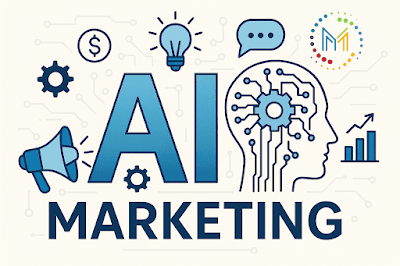
As someone who’s closely observed this space evolve over the past decade, I can confidently say that artificial intelligence (AI) is no longer just a buzzword tossed around in tech conferences or trendy webinars. It has become the beating heart of modern marketing. Whether you’re a solo entrepreneur, an agency owner, or a CMO of a multinational brand, AI is touching everything—from how we plan strategies and target ads, to how we create content and engage with customers.
This change isn’t incremental—it’s transformational. We’re talking about a complete redefinition of roles, tools, and even skills. Just five years ago, personalization meant adding someone’s name to an email subject line. Today, it means dynamically adjusting an entire website in real time based on predictive behavior. That’s not evolution; that’s revolution.
Let’s consider the bigger picture. Algorithms now decide what ads you see, what content appears on your feed, and even the best time to email a potential lead. AI doesn’t just react—it anticipates behavior. And while this may sound incredibly efficient (and it is), it also raises important questions:
🧠 Are we losing the human essence in our marketing efforts?
💬 Is automation making us lazy marketers, or is it freeing us to focus on creativity and strategy?
🔐 And what does this mean for trust, privacy, and ethical responsibility?
This article isn’t just another “AI is the future” piece. You’ll find an honest, detailed, and opinionated exploration of how AI is reshaping digital marketing in real time. I’ll walk you through what’s working exceptionally well, what’s clearly overhyped, and what marketers—especially those new to AI—need to be preparing for right now.
More importantly, I won’t just throw facts and stats at you. I’ll share personal insights from my own journey working with AI-powered tools, campaigns, and content strategies. I’ll highlight not only the opportunities but also the pitfalls, so you can make informed decisions—not based on trends, but on truth.
Because at the end of the day, marketing is still about connection. And even in this age of automation, I believe that the human touch is irreplaceable.
So buckle up. Whether you’re curious, cautious, or completely overwhelmed by AI, this deep dive will help you see beyond the surface—and prepare for a future where human creativity and machine intelligence work side by side.
🚀 1. The Rise of AI in Digital Marketing
Let’s begin by understanding why AI is such a big deal. AI technologies—such as machine learning, natural language processing, and computer vision—are now embedded in tools we use daily: Google Ads, Facebook’s algorithm, email automation platforms, and even chatbots.
When AI is done right, it becomes an invisible partner: analyzing data, optimizing performance, and automating repetitive tasks. According to **Statista**, global spending on AI in marketing is projected to surpass **\$107 billion by 2028**. That’s not a trend—it’s a tidal wave.
As a marketer, I see this as a double-edged sword. On one side, AI saves us time and boosts efficiency. On the other, it creates new ethical and creative challenges that we can’t ignore.
📊 2. Personalized Marketing at Scale
Remember when personalization meant adding someone’s first name in an email? AI has taken that concept and supercharged it.
With behavioral data, predictive analytics, and AI-driven customer segmentation, marketers can now create:
- Hyper-targeted ads
- Personalized product recommendations
- Tailored email content
- Custom website experiences
💡 My Take: I love the precision AI allows here. It respects the user’s time by showing them what truly matters. But here’s the catch: overdoing it can feel creepy. No one wants a brand that seems to know too much.
🧠 3. AI-Powered Content Creation
From automated blog writing to image generation, AI is now helping marketers produce content faster than ever. Tools like ChatGPT, Jasper, and Copy.ai are revolutionizing the writing process.
AI-generated content is:
- SEO-optimized
- Quick to produce
- Consistent in tone
However, it lacks one essential ingredient: **human emotion**. As a content creator, I believe that the best-performing articles are those that blend AI precision with human insight. That’s what I aim to do in this very article.
🤖 4. Smarter Customer Service With AI Chatbots
Chatbots have matured. They’re no longer clunky, robotic tools that frustrate users. With AI, they can:
ـ Understand natural language
ـ Provide 24/7 support
ـ Learn from interactions to improve over time
🚨 Caution: A bot can’t replace empathy. I recommend using AI chatbots as a first line of defense, followed by human support for complex issues.
📈 5. AI in Predictive Analytics and Forecasting
This is one of AI’s most powerful contributions. Predictive models analyze historical data to forecast:
* Future buying behavior
* Market trends
* Churn rates
* ROI on campaigns
As someone who’s worked on both AI-backed and traditional marketing campaigns, I can tell you: data-driven decisions almost always win. But again, you need the human eye to detect anomalies and inject creativity.
📌 Read also : How Artificial Intelligence is Changing the Future of Business
💼 6. Paid Advertising Optimization
Google Ads and Facebook Ads are becoming more autonomous. AI handles:
* Bidding strategies
* Audience targeting
* A/B testing
* Ad placements
🎯 Pro Insight: AI is phenomenal here. It has boosted ROI in nearly every campaign I’ve run. But don’t go on autopilot. Monitor performance, tweak creatives, and challenge the AI occasionally—it can make mistakes.
🔐 7. AI and Consumer Privacy
This is the elephant in the room. With AI collecting and analyzing vast amounts of user data, privacy concerns are growing. Regulations like **GDPR** and **CCPA** are just the beginning.
✔️ *My Recommendation:* Be transparent. Let users know how their data is used. And above all, **don’t abuse the data**—because trust, once lost, is hard to regain.
🎯 8. AI’s Role in SEO
AI tools like Surfer SEO, Clearscope, and SEMrush are revolutionizing content optimization. AI helps in:
* Keyword clustering
* Competitor analysis
* Content scoring
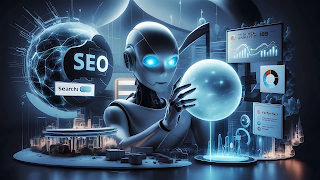
But don’t forget: search engines like Google also use AI (e.g., RankBrain). So writing for AI (SEO) *and* for humans is no longer a choice—it’s a necessity.
✍️ *Writer’s Note:* Every article I publish follows this dual strategy. That’s how I rank, and that’s how I build trust.
📌 Read also : Ghibli-Style Image Generation with ChatGPT: The Complete Guide to Creating Magical Anime Scenes Using AI
🎨 9. The Human Touch: What AI Still Can’t Do
Despite its power, AI has limitations:
* It lacks intuition and emotional depth
* It doesn’t understand context the way humans do
* It can’t create brand voice or culture
I believe that the future of marketing is hybrid : AI handles the data, automation, and structure. Humans bring the emotion, storytelling, and ethics.
❓ FAQs: Artificial Intelligence in Digital Marketing
① Can AI fully replace marketers?
A: No. AI is a tool, not a substitute. It enhances human capabilities but doesn’t replace them.
② Is AI-generated content good for SEO?
A: Yes, if edited by humans. AI alone may produce generic or repetitive content.
③ How do I start using AI in marketing?
A: Start small—with tools like Grammarly, Surfer SEO, or ChatGPT—and scale as you learn.
④ Is AI marketing ethical?
A: It depends on how it’s used. Transparency and respect for user privacy are key.
⑤ Will AI take my job?
A: AI will change your job, not take it. Embrace it as a partner, not a threat.
📢 Conclusion: The Future Is Already Here
Artificial intelligence is not a distant concept waiting to arrive. It’s already here—learning, evolving, adapting, and reshaping the marketing world at a pace we’ve never experienced before. From the way we reach potential customers to how we understand their needs and behaviors, AI is now the silent partner behind many of our decisions. And that reality is no longer optional—it’s inevitable.
As someone deeply involved in the digital marketing landscape, I stand at a fascinating crossroad. On one hand, I’m incredibly excited by what AI brings to the table. Imagine being able to launch campaigns faster, analyze data in seconds, and personalize every user’s experience at scale. AI lets us reach the right person, at the right time, with the right message—a marketer’s dream come true. We now have the ability to optimize ad spending in real-time, detect behavioral shifts before they happen, and deliver smarter, more impactful messaging than ever before.
But with great power comes great responsibility. And that’s where the caution kicks in.
While AI enhances efficiency, it can never replace the core of what makes marketing truly powerful: the human touch. Marketing isn’t just about conversions, metrics, and algorithms—it’s about connection. It’s about understanding emotion, context, culture, and nuance. AI lacks empathy. It doesn’t feel joy, fear, curiosity, or love—yet those are the exact emotions that drive human behavior and influence decision-making.