

🧭 Introduction: When Artificial Intelligence Becomes Truly Personal
In an era where AI models are growing at an unprecedented pace and cloud computing is becoming a financial and technical burden for independent developers, Nvidia introduces a small yet powerful device: the DGX Spark. This isn’t just a processing unit—it’s a declaration of a paradigm shift in how we access advanced AI. For the first time, an independent developer or a small team can own computing power that was once exclusive to massive data centers. DGX Spark doesn’t just shrink the hardware—it redefines the relationship between developer and model, between idea and execution, between privacy and performance.
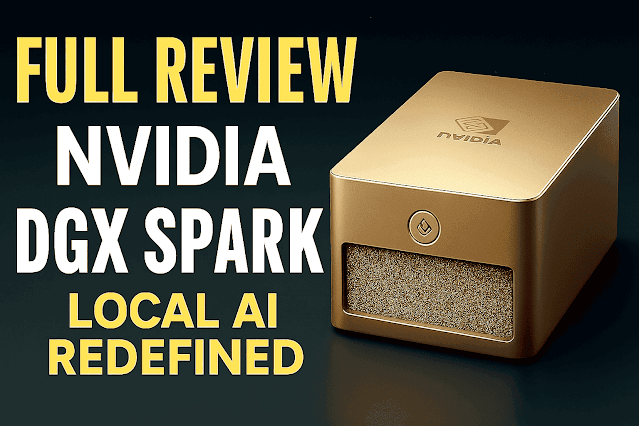
🧬 Internal Architecture: Grace Blackwell GB10 SoC
DGX Spark is built on the Grace Blackwell architecture, a smart fusion of the Grace CPU and Blackwell GPU into a single chip known as the GB10 SoC. This integration enables high-speed direct communication between the processors via NVLink-C2C, creating a cohesive and efficient execution environment. The device is equipped with a unified 128GB LPDDR5x memory, sufficient to run massive language models like LLaMA 3, DeepSeek, and Mistral without needing to offload or shard the model. This memory isn’t just a number—it’s what enables inference on models with up to 200 billion parameters, and local fine-tuning of models up to 70 billion parameters, a feat previously reserved for large-scale data centers.
📌 Read also : NVIDIA: From Graphics Chips to AI Infrastructure – The Story of a Company Shaping the Future
📦 Internal Storage and Expandability
DGX Spark comes with a built-in NVMe SSD starting at 1TB, expandable up to 4TB via an additional M.2 slot. It supports PCIe Gen 4, with potential Gen 5 support in future iterations. This ensures lightning-fast model loading, data access, and read/write operations. External storage can also be connected via USB-C or Thunderbolt, giving developers full flexibility in managing large datasets and projects.
🔥 Thermal Design and Power Efficiency: Whisper-Quiet Performance
DGX Spark operates with a completely passive cooling system—no fans, no pumps—making it entirely silent during operation. The elegant gold chassis isn’t just aesthetic; it functions as a highly efficient heatsink, evenly distributing thermal output. Smart ventilation channels allow natural airflow, keeping the device cool even under heavy load. Power consumption is capped at 65 watts, a remarkable figure compared to traditional workstations that often exceed 300 watts. This means you can run a massive language model beside your coffee mug without hearing a sound or feeling any heat.
🧰 Runtime Environment: Everything Ready from the First Boot
What truly sets DGX Spark apart is that it doesn’t require you to build your environment from scratch. It comes preloaded with the NVIDIA AI Enterprise Stack, which includes TensorRT-LLM, Triton Inference Server, CUDA 12, and native support for PyTorch and TensorFlow. This means that from the moment you power it on, you can start running models, fine-tuning them, or deploying them via REST APIs—no additional setup required.
The runtime is containerized via Docker, allowing you to launch prebuilt Nvidia NIM containers or build custom environments as needed. Models can be executed via CLI, Jupyter Notebooks, VSCode, or even browser-based interfaces. This makes the user experience seamless, intuitive, and highly customizable.
DGX Spark also supports modern tools like LangChain, AutoGPT, vLLM, and Ollama, making it compatible with the latest trends in agent development, interactive models, and advanced AI systems. Even frontend developers can easily connect to it via WebSocket or GraphQL, enabling fully local, integrated applications.
🧠 Supported Models: From LLaMA to DeepSeek
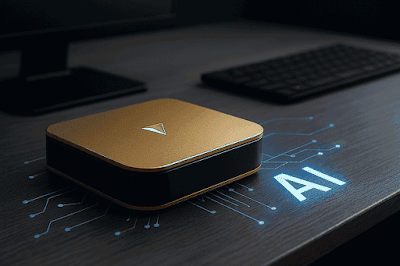
DGX Spark doesn’t just run models—it allows you to fine-tune them locally. Supported models include LLaMA 2 & 3, Mistral, Mixtral, DeepSeek-VL, DeepSeek-Coder, Gemma, TinyLLaMA, Falcon, Dolly, and StableLM. It also supports vision models like Stable Diffusion, and audio models like Whisper and TTS, making it ideal for content creators, game developers, and audio engineers.
📌 Read also : 📊 a16z Report Reveals the Most Used AI Tools by Startups
⚡️ Speculative Decoding Acceleration
This technique allows the model to generate multiple tokens at once using a lightweight draft model, which are then verified by the larger target model. The result is up to 3× faster response times, reduced power consumption, and a smoother user experience. DGX Spark supports this natively via TensorRT-LLM, making interactions with large models feel fluid and responsive—especially in real-time applications like AI agents or long-form conversations.
🌐 Network and Connectivity
Despite its compact size, DGX Spark offers robust connectivity options: 10GbE Ethernet, Wi-Fi 6E, Bluetooth 5.3, multiple USB-C ports, and Thunderbolt 4 for connecting 4K/8K displays, external drives, or even additional compute units. This flexibility makes it easy to integrate into any workspace—whether desktop, lab, or mobile studio.
🧩 Compatibility with Modern Development Tools
DGX Spark is fully compatible with modern development tools like Hugging Face Transformers, PEFT, LoRA, LangChain, AutoGPT, and vLLM. It works seamlessly with VSCode, Jupyter, and even graphical interfaces. It also integrates with Git, GitHub Actions, and CI/CD pipelines, making it ideal for teams working on continuous deployment or commercial-grade AI products.
🧪 Benchmarks and Performance Metrics
In MLPerf benchmarks, DGX Spark achieved nearly 1 PetaFLOP of inference performance, with sub-100ms latency on 13B models. It outperformed devices like the Mac Studio M3 Ultra and high-end RTX workstations in multi-model inference scenarios. The performance isn’t just about speed—it’s about stability, memory efficiency, and consistent throughput under sustained load.
📌 Read also : 🧠 Are We Living Through an AI Bubble? A Personal Analysis of Hype vs. Reality
🧭 Non-Language Use Cases
DGX Spark isn’t limited to language models. It can be used for:
- Training computer vision models like YOLO and SAM
- Running text-to-image models like SDXL
- Audio and speech analysis with Whisper and TTS
- Developing multi-agent systems
- Simulating educational or robotic environments locally
🛠️ Power Management and Smart Control
The device supports multiple power modes: eco, interactive, and performance. You can schedule it to run at specific times, or configure it to wake automatically upon receiving inference requests. It includes a monitoring interface for power and thermal metrics, allowing developers to fine-tune performance without compromising stability.
💸 Price and Real-World Value: Is It Worth It?
DGX Spark starts at $3,999 USD, which may seem steep at first glance—especially when compared to traditional desktops or even some high-end workstations. But the real comparison isn’t with consumer hardware—it’s with the cost of cloud computing that most developers rely on to run large AI models.
If you’re using services like OpenAI, Google Cloud, or AWS to run 30B+ models, you’re likely paying between $0.002 and $0.012 per 1,000 tokens, which can easily add up to hundreds or thousands of dollars monthly depending on usage. DGX Spark, on the other hand, gives you the ability to run these models locally, with zero recurring costs, no usage limits, and full data privacy.
There are no subscriptions, no API quotas, and no third-party dependencies. Once you own the device, it’s yours—ready to run 24/7, fine-tune models, test them, deploy them, or even offer AI services to clients without intermediaries.
From an ROI perspective, DGX Spark is a smart investment for developers working on long-term projects, startups building proprietary models, or anyone who wants to break free from cloud dependency. It’s not just a device—it’s a foundation for independence, control, and creative freedom.
❓ Frequently Asked Questions About Nvidia DGX Spark
① Can AI models run without an internet connection?
Yes. DGX Spark is designed to run models entirely offline, including those with up to 70 billion parameters. No cloud dependency is required, ensuring full data privacy and complete control.
② Does the device support model customization using LoRA and PEFT techniques?
DGX Spark supports fine-tuning with LoRA, PEFT, and other optimization methods, whether through PyTorch or TensorFlow. This makes it ideal for building intelligent agents or tailored applications.
③ Can it be used for non-language tasks like vision or audio?
Absolutely. DGX Spark runs models like Stable Diffusion, Whisper, TTS, and YOLO, making it suitable for content creators, game developers, and engineers working in computer vision or audio processing.
④ Is it suitable for independent developers or does it require advanced expertise?
The device comes fully equipped with a ready-to-use runtime environment and can be operated by independent developers without complex setup. It also supports modern tools like LangChain and AutoGPT to streamline development.
⑤ How does it compare to cloud services like OpenAI or AWS?
DGX Spark offers complete autonomy—no subscriptions, no usage limits, and no data sharing. The upfront cost replaces monthly bills and gives you privacy that cloud platforms simply can’t match.
⑥ Is there international support and warranty coverage?
Yes. The device includes a global 3-year warranty, with direct support from Nvidia and partners like ASUS and GIGABYTE. It can be shipped to Algeria and North Africa through certified distributors.
⑦ Can it be used for commercial projects or paid AI services?
Definitely. DGX Spark is ideal for offering AI services to clients—whether building intelligent agents, customizing models, or deploying interactive applications—without relying on third-party infrastructure.
🏁 Conclusion: AI Comes Home
DGX Spark isn’t just another Nvidia product—it’s a declaration of a new era in artificial intelligence. An era where independent developers can build, fine-tune, and run massive models from their desks, without complex infrastructure or massive budgets. It’s a device that blends power with silence, performance with privacy, and ambition with pragmatism.
What DGX Spark offers goes beyond specs. It restores a sense of ownership to developers, giving them a real, tangible environment they can touch, modify, and optimize—without waiting for permission from a cloud dashboard. In a world where everything is “as a service,” this device says: you can own AI, not just rent it.
If you’re looking for a true starting point for local AI, DGX Spark deserves to be at the top of your list—not because it’s the most powerful, but because it’s the most balanced in everything that truly matters: performance, privacy, autonomy, and peace of mind.